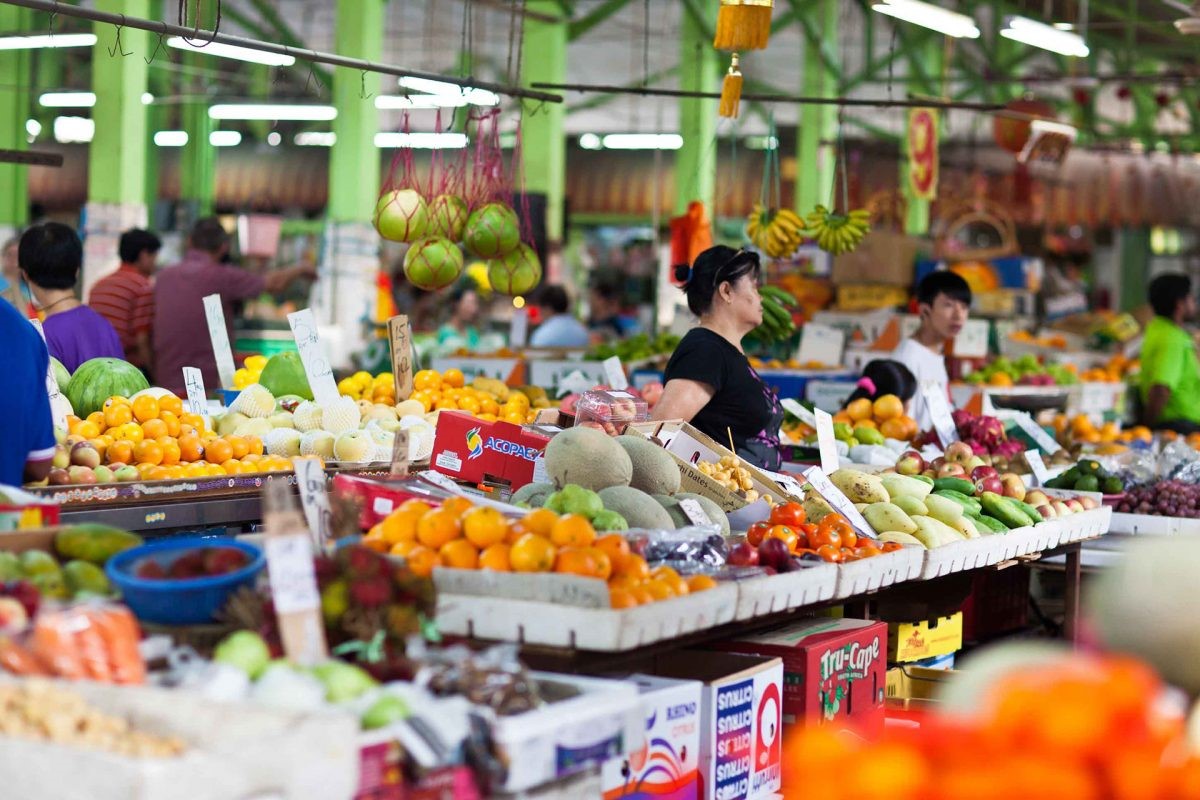
Wet Market-Goers, Brace Yourselves!
12 Jul 2016

We must explain to you how all seds this mistakens idea off denouncing pleasures and praising pain was born and I will give you a completed accounts..
Consultation
Now that Norway has been out of the World Cup after a close fight with England during the quarter-final match, those of you who have had the Haaland effect from watching him play must find other ways not to lose touch with him, although you can probably only idolise him from afar, if you don’t know his address. Since Haaland also plays for Manchester City, he has been based in Manchester since 2022, although he left for Norway after the quarter-final match against England.
So, one of the ways is to, of course, go through his YouTube channel where there’s videos of him posting about A Day in A Life… of a Pro Footballer. And while there are a multitude of things you can talk about post-watching the video(s), especially because he’s both cheeky yet humble, thanks in part due to his facial expressions, which you sometimes can’t describe, can you get over the fact that one of his options for lunch is egg fried rice? It’s even more humourous and cuter when you realise that the Nasi Goreng Nordic is an inspiration of the Indonesian nasi goreng. Through one of the videos, Haaland can be seen eating egg fried rice with seabass fish and asparagus on the side, before heading for training, to keep him fuelled and well-nourished, yet not too groggy for practice.
For any kind of fried rice, it’s best to use overnight rice, or leftover rice. Fresh rice gives you a rather different texture. There has to be lots of oil, hence its name, fried rice. Some people like it with added, artificial flavourings, which is up to them. The most common seasoning is salt. For natural flavour, you could use anchovies or shallots or garlic.
In Indonesian fried rice, there’s sambal on the side, which is not clear in Haaland’s video. Perhaps, in the Nordic version, there’s herbs like dill and leek, while in the Indonesian style, the herbs tend to be sourced from what’s closer to the region, also due to different tastebuds. But otherwise, those of you who grew up in Southeast Asia or have been to Southeast Asia would have at least heard of nasi goreng, if you dislike it for being super oily. It’s convenient, fast, and can be customised, as it is a one-dish meal where you can put any form of meat of your liking, or even egg, especially if you’re in a hurry. Depending of the type of nasi goreng, there may or may not be sambal, which is commonly found in Malay and Indonesian cooking.
Rice is a staple in most parts of Southeast Asia so rice is the main ingredient in nasi goreng, while goreng means fry. So, goreng is taken to mean fried, which is an adjective, since Malay/Indonesian doesn’t have past, present or future tenses, like in English. To change Malay/Indonesian adjectives into past tense, present or future tenses there must be an extra word, a time-marker (to indicate completion or otherwise) before the adjective and the change to a passive verb. Unless you are describing nasi goreng (menu item), the passive voice is not needed.
While rice is also found in cuisines of the world, like the risotto and paella, the kind of rice, grain type, and the method of cooking make fried rice a comfort food, and quite a standout in Southeast Asia. The texture of the rice is also made to suit the palates of Southeast Asians. If you base it on history, Indonesia has long been influenced by the Dutch, so you can quite easily locate some form of nasi goreng in the Netherlands.
So, perhaps, there are more similarities in terms of diets across the world than you think.
Maybe a certain Malaysian internet sensation who’s famous for his egg fried rice should watch Haaland’s video(s).
Till then, happy watching and eating!

Jo Leen now spends her days crafting compelling content for Inkscribehub. She was previously attached to a business intelligence firm.





Showing 0 comments