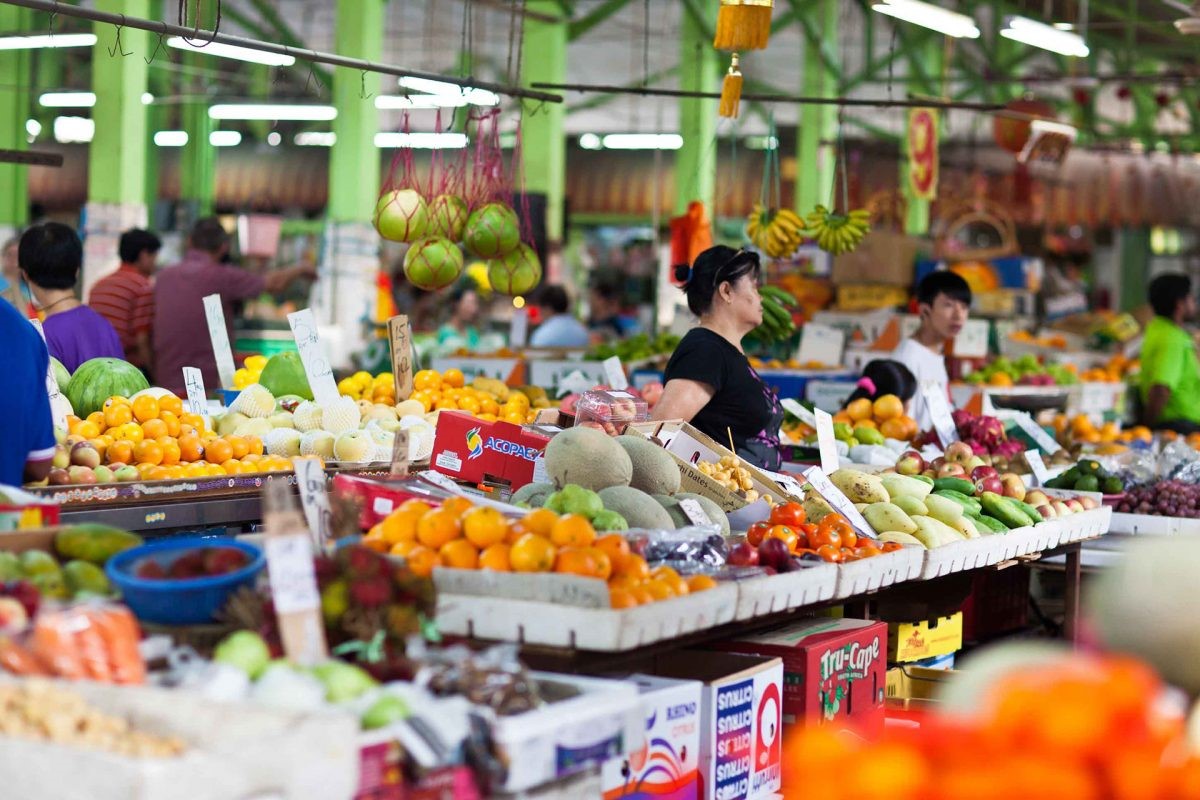
Wet Market-Goers, Brace Yourselves!
12 Jul 2016

We must explain to you how all seds this mistakens idea off denouncing pleasures and praising pain was born and I will give you a completed accounts..
Consultation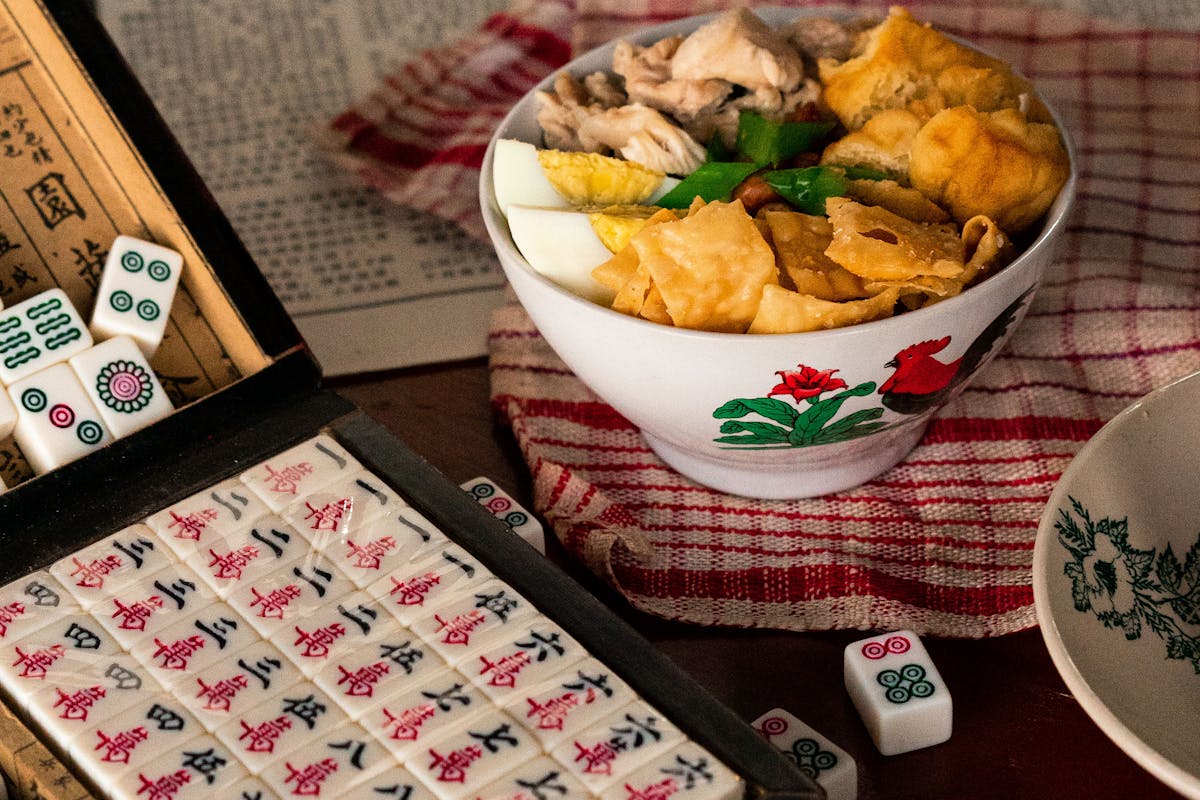
This book, the debut novel by the Malaysian Janet Tay, reads like a simmer, an otherwise crucial technique in making any (laksa) broth taste as heavenly as possible. It can be quite hard to digest the details, prolonging the story, but you’ll give yourself a pat on the back for holding on because the story does gain steam. Those of you who enjoy the colourful, flavourful variety of Malaysian food on offer would consider this a fitting homage to it. It’s like a thank you note for making us salivate and experiment with our taste buds, even if it means you’ve to down lots of water after savouring the variety of gravies, sauces, spices, dips, and condiments, giving your dish/order that extra kick needed. Sinful, but satisfying. If you also have the palate for Teochew, Hainanese, Cantonese, and Japanese food, this book should be a comforting read. It goes without saying that much of the book centres around Chinese culture and expressions of Chineseness, and you’d be even prouder if you’re a Hokkien or a Teochew, especially if you have not forgotten what the culture looks and sounds like. Of course, for those outside the culture, and international readers of this book, it would be better if you have Malaysian friends, provided they live and breathe like typical Malaysians, taking the spices and all sorts of flavours quite easily. If reading this book doesn’t make you want to order laksa, I don’t know what will… unless of course, you do not like (Sarawak) laksa.
Now, because Janet Tay moved to Sarawak’s Kuching at a young age from her birthplace of Kuala Lumpur, the setting is pretty much in Sarawak. If you’re new to Sarawak, most of the Sarawakian food mentioned throughout can feel like a blur… because it’s not always easy to get authentic Sarawakian food in the other parts of Malaysia. What’s more is if you’re a Malaysian living abroad, not unlike the fictional son character in the book, who eventually resigns to the fact that he’ll never make it big overseas, even though, understandably, he was working as a sushi chef, which not everyone is skilled and patient enough to perform their duties, especially in a Japanese restaurant different from your country of birth and where you grew up. Although it can get confusing sometimes, it’s balanced and interesting to read and understand the different father-son perspectives.
If I may, part two of this 344-page book was where the pace improved. I was also getting annoyed by the son’s perspective, especially when he was abroad as a sushi chef, engaging in harmful and life-threatening activities. But it’s understood that it’s quite the norm to have that one annoying character that can dishearten and/or anger the reader/audience. It’s not like the fictional father is any less annoying, but it’s disappointing to see that the son would resort to such dirty tactics.
But of course, many of us know what it’s like to have different, conflicting personalities and viewpoints. Whether in business or in your personal life, you will surely encounter such people who may not necessarily always agree on how things should be done. The difference lies in how we decide to handle the situation, either react in anger and dissatisfaction, leading to a fallout, in the worst-case scenario, or resolve issues in a diplomatic and polite manner. This is surely apparent in how the fictional father intends to keep the kopitiam the way it is, while the fictional son wants to modernise it to keep up with the times as well as be on par and perhaps even above their competition.
Fortunately, the two (father and son) found common ground through Teochew Opera, which is a dying art form, mainly because many of those from the younger generation prefer high-energy concerts by popular artistes from the English-speaking or European world. Needless to say, this portion made me emotional because it made me think of my own extended family, one of them a fan of traditional Chinese opera, although Teochew Opera is distinct from Hokkien opera and other types of Chinese opera.
The twists to the story – while one was predictable, the other two weren’t. As a member of the overseas Chinese community, it’s quite normal to acknowledge your roots but not want to go back or not have native speaker level Mandarin, because after all, Malaysian Mandarin is a proud mix of lots of lingos spoken in Malaysia. Hence the part on the broth when it was revealed that the recipe had gone through alterations, was not surprising, because when there’s movement and mobility, you’ll surely want to adapt as much to the newer culture, where you’ll settle down and be a local. Therefore, there’s comfort when Malaysian Mandarin is spoken to another Malaysian-Chinese, whose endeavours take them abroad, beyond their comfort zone. This is partly also owing to the fact that Malaysia has different school types, where Malaysia is the only country outside of China to have more than one school type which allows the Chinese diaspora community in Malaysia to learn subjects in the Chinese-medium, which is completely different from Malaysia’s national language. In order to write in Chinese, you’ll be required to know characters (most often by heart/or rote memorization), which are made up of different strokes and these strokes have a particular order, which all Chinese language learners have to follow. It is only through writing characters that you’ll truly understand what is being spoken, as some Chinese words, which uses the Hanyu Pinyin (to allow and improve student literacy rates), have exactly the same tone mark. This is opposed to English and Malay, which are made up of alphabets, which are typically less demanding to write, unless you have a challenge with handwriting or a learning/processing condition that makes it take slightly longer for you to distinguish and write alphabets.
Sarawak Laksa itself usually has sambal belacan and coconut milk/santan as the base, part and parcel of Malay cooking and dishes. Of course, eventually, the fictional son in the book, changes the recipe to include salted ikan terubuk to give that extra umami to try winning the bet the fictional father had with his rival. But, otherwise, the point is that many of the overseas Chinese have adapted to local flavours.
As for the parts I didn’t see coming, I mean, who would have thought the competitor had worked under the father of the present-day owner of the laksa kopitiam? The protagonist’s late father’s past was also shocking, mainly because I grew up in a different generation.
However, I was also hoping for the story to be even sadder. But kudos to the author for making me think back to what I grew up with in either my late grandmother’s kitchen or my mother’s kitchen. I’m sure lots of readers would be craving for something homecooked after reading this, even though, the star of this book is surely the Sarawak Laksa, which not everyone can have access to that easily, unless the easy way out is to sit and order from an on-demand delivery service. But hey, it’s always best to have the typical kopitiam ambience, okay?
Overall, “Early Mornings at the Laksa Café” is quite the representation of Malaysian food and food of the Chinese diaspora of Malaysia, although, understandably, there are many other varieties, including foreign influence, like Japanese food. I just don’t know if the author should have used that much pork in the selection of dishes to include, especially if non-Chinese readers in Malaysia were to pick up this book, where the Chinese community is not even ¼ of the total population (and dwindling). Even then, there are those within the Chinese population who do not eat pork.
Would you be getting this book? Would you be also getting bowls of Laksa Sarawak after/or even whilst reading this book? Or perhaps, if you’re like me, you’re re-reading to see whether there are any important, juicy bits that you may have overlooked?
NOTES:
On the origins of Laksa and some of the popular types (differing by Malaysian states)
It is worth noting that there are varieties of Laksa, originally created by the Peranakan Chinese of Malacca, giving rise to the combination of Malay spices to the delight of Chinese tastes by using noodles. Known as the Breakfast of the Gods in Sarawak, which uses less santan than other varieties, the broth is spicy (medium intensity), served with beehoon, thin omelette strips, bean sprouts, shredded chicken, prawns, coriander. There will be a sambal (belacan) for dipping and a wedge of lime on the side. It is aromatic and nutty as a result of the candlenut(s) or buah keras and peanuts or kacang tanah. In some variations, white sesame seeds are also added to boost the nutty flavour.
Meanwhile Laksa Johor uses curry powder, coconut milk, and fish paste as the base. Grated, deep-fried ground coconut, known as kerisik, is used to thicken the broth to, give out a rich consistency and aromatic fragrance. Due to foreign influence, Laksa Johor uses spaghetti as the noodle ingredient. Laksa Johor therefore should be rich, thick, and savoury. It is topped with raw veggies or ulam like cucumber and big onion. To truly enjoy Laksa Johor, it’s recommended to eat with your hands.
Penang Laksa gets its flavour from tamarind and fish, as there is no coconut milk in this type. Thick rice noodles are used. You’ll need to have bunga kantan, mint leaves or daun pudina, pineapple, mackerel, and petis udang or hei ko (in Hokkien) as toppings for Penang Laksa.
Sweet in flavour profile yet creamy due to the use of coconut milk, is the Nyonya Laksa. It also uses candlenuts to give you that extra oomph. The spice paste includes chilli, lemongrass and galangal or lengkuas. Dried prawns or udang kering is also used as part of the base to give out that slightly umami flavour. While vermicelli is used, yellow noodles can be an option. In Nyonya Laksa, the toppings are typically cockles, tofu pok, and fish cake. Boiled eggs would be the norm as well.
For those from the East Coast of Malaysia, laksa is known as Laksam, for which the noodles are made from rice flour, flattened first, then rolled. It is made with fish meat and coconut milk as the base, giving rise to its savoury but white broth. It is topped with ulam, sambal belacan and a wedge of lime, for that tangy flavour.
In terms of similarities and differences, Nyonya Laksa, Sarawak Laksa, and Laksa Johor use sambal belacan. However, both Laksam and Penang Laksa do not.
On Spiciness
In Southern China and in some Malaysian-Chinese cuisines, where white peppercorns are used (in soup), the spiciness is numbing, biting and stinging, making the heat more direct and sharper. In Malay cooking and cuisine, when sambal belacan and/or udang kering is used, the spiciness is more layered with sweetness and sourness, and pungent, but rarely sharp. The spiciness and sourness are not to be confused with the hot and sour soup, with origins from China’s Sichuan province. In the soup, lots of Chinese herbs and tofu are used. Malay herbs like daun limau purut/kaffir lime leaves are used by the Peranakan and Malay communities in Malaysia. Bunga kantan is also another plant/flower, used as a garnish or in cooking the Peranakan and or Malay way/style.
As for the sourness of the hot and sour soup, it comes from Chinese black rice vinegar. Whereas in Malay cooking, the sourness can come from lime or limau kasturi (used as a pairing for sambal (belacan)) or asam jawa or asam keping/gelugor. Limau purut can also be used but it has a sharper, sweeter taste, used in Thai cooking, but also adopted by the Malay and Peranakan communities in Malaysia.
As Malaysian-Chinese has ancestral roots in Southern China and influence from the Malay population and lingo, they have adapted their tastebuds to the layered version of spiciness. Although understandably, the numbing type of spicy is also increasing in popularity in Malaysia with fast food restaurants offering ma la spicy options and the increasing number of Chinese restaurants serving ma la, either as their main specialty, or as part of a wider variety of Chinese cuisine from China.
On the different types of peppercorns
Typically, a Malaysian-Chinese household would favour white peppercorns for use in light-coloured soups for its earthy but hotter flavour profile. Black peppercorn has a woody, bold, and strong flavour profile and is more common for meat dishes, although you can also use in soup, usually more suited for dark-coloured soup and prefer a more aromatic soup.

Jo Leen now spends her days crafting compelling content for Inkscribehub. She was previously attached to a business intelligence firm.





Showing 0 comments